
Voxel Blast Jam
Unico StudioPuzzle
4.7452.00 Reviews
- Version
- 1.5.3
- Installs
- 100.00K
- Age Rating
- Everyone
Screenshots

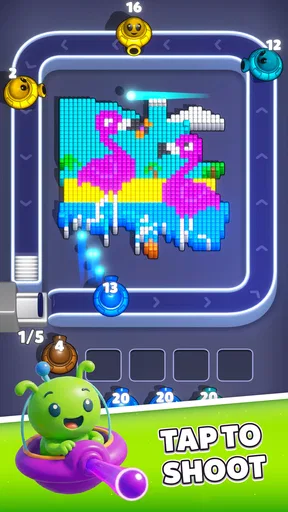
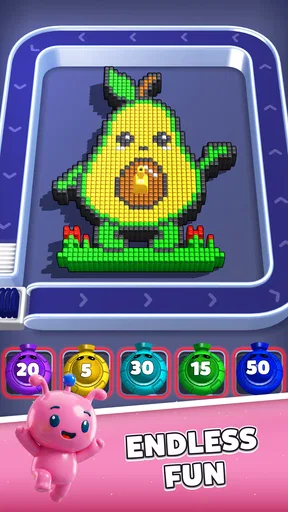
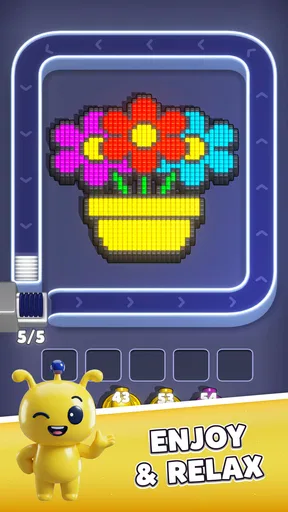
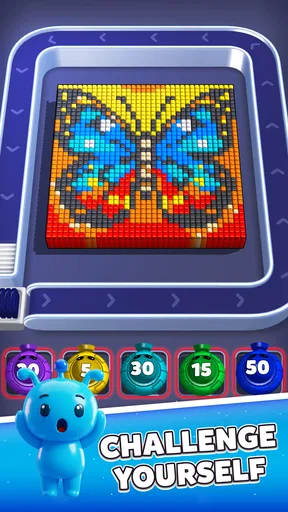
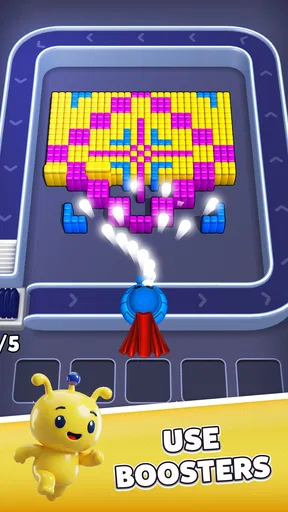
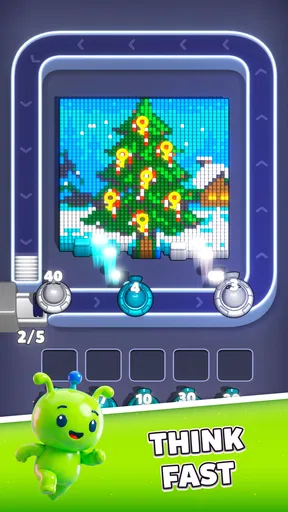
Our Review of Voxel Blast Jam
 Analysis by Appyee
Voxel Blast Jam immediately presents itself as a relaxed puzzle game rather than a test of reflexes. I found its central idea easy to understand: aim at voxel-style blocks, clear matching colors, and make progress without a countdown pressing me to rush. That slower pace gives the game a welcoming first impression, especially when I want something I can play in short sessions without preparing for a demanding challenge.
It comes from Unico Studio and is available as a free game for everyone, with optional purchases ranging from $0.99 to $74.99 per item. The audience is broad, but the experience is most convincing for players who enjoy casual shooting puzzles and visual sorting more than complex stories or competitive intensity. Its average rating is 4.7 from around 12K ratings, while the game has passed 100K installs. Those figures suggest that the simple format has found a sizeable audience, although popularity alone does not make every session equally satisfying.
My first useful observation is that the lack of a timer changes how I look at each board. Instead of immediately searching for the fastest possible move, I can study the arrangement, consider where a shot will travel, and decide whether clearing one color now will help expose a better option later. That makes the game approachable for a quick break, but it also means the enjoyment depends heavily on whether I like planning at a gentle pace.
How the visual language turns blocks into a playable mood
The voxel presentation is more than a decorative filter. Chunky shapes make the board readable at a glance, and the color-focused design gives each move a clear visual purpose. I do not need a realistic setting to understand what matters on screen. The blocks, their arrangement, and the result of a successful shot carry most of the communication.
That clarity is particularly useful on a phone. Smaller displays can make detailed puzzle boards tiring, but the simplified forms in this game support quick recognition. I can identify the broad color groups without spending the opening seconds of every turn interpreting a complicated illustration. The result is a playful visual mood that feels closer to a toy box than to a serious arcade arena.
The setting is intentionally light. There is no need to learn a fictional history before playing, and the voxel look gives the game a consistent identity without asking the player to follow a narrative. For me, this works because the puzzle remains the main event. The visual theme frames the action instead of competing with it.
There is also a trade-off. Players who want a strong story, a detailed world, or a constantly changing artistic presentation may find the block-based style limited. Its strength is immediate readability, not visual spectacle. I would recommend it to someone who enjoys colorful, compact game boards; I would not choose it for a player looking for a large adventure or a rich character-driven setting.
Why the colors matter more than decoration
In many puzzle games, color is simply a way to make pieces distinct. Here, color also shapes the player’s attention. I naturally scan for clusters, isolated pieces, and lines that might become useful after a first shot. A practical tip is to pause before firing and inspect the whole arrangement rather than focusing only on the nearest matching block. Because there is no timer, that extra look costs little and can prevent a move that leaves the board awkwardly arranged.
Another useful habit is to treat the visible board as a sequence of opportunities rather than a collection of individual targets. Clearing one area may change what can be reached next, so I get better results when I ask which shot opens the most useful space. This is a small but meaningful shift from simply matching the most obvious color.
The voxel art supports that approach by keeping the board visually clean. I can concentrate on relationships between blocks instead of fighting excessive decoration. That makes the game a good fit for a commute, a waiting room, or a quiet evening when I want a puzzle that feels active but not mentally exhausting.
Sound, rhythm, and the feeling of a calm shot
The game’s mood depends on how its shooting action is paced. Since there is no countdown, the rhythm comes from the player: inspect, aim, fire, observe the result, and reassess. I appreciate that the structure leaves room for a pause between decisions. It feels less like being pushed through an arcade challenge and more like arranging a small chain of satisfying actions.
The visual impact of a shot is important in a game built around blocks and colors. A successful move needs to feel readable immediately, otherwise the player has to guess whether the board changed in a useful way. The voxel style gives those moments a straightforward, tactile character. Even without relying on dramatic presentation, the game can make a simple clearance feel rewarding when the result is easy to follow.
I would describe the overall sound-and-rhythm relationship as functional and relaxed rather than cinematic. The game’s identity comes primarily from the combination of shooting and block puzzles, so the atmosphere does not depend on a large soundtrack or an elaborate fictional setting. That is a benefit for players who want something unobtrusive, but it may feel too restrained for anyone expecting a powerful audio experience.
For everyday use, this restraint matters. I can imagine playing a few rounds while having coffee, stopping after a single board, and returning later without feeling that I interrupted a long sequence. The lack of a timer makes the game easier to fit around real life. At the same time, the relaxed rhythm can expose the limits of the format: if I am specifically looking for adrenaline, rapid reactions, or escalating pressure, a traditional arcade puzzler would probably suit me better.
When the slow pace helps and when it does not
The best way to approach the pacing is to use it as a planning advantage. I do not rush the opening shot. Instead, I look for a move that either creates a larger clear or improves access to the next useful color. This is especially helpful when several targets appear equally tempting. The game rewards attention more than frantic tapping, so a deliberate player can turn its calm tempo into part of the challenge.
There is a downside for players who equate challenge with urgency. Without a countdown, mistakes feel less dramatic, and a board may not produce the same tension as a puzzle that constantly threatens to run out of time. That is not a flaw for casual play, but it is a genuine limitation when comparing it with faster alternatives. I would pick this game for decompression, not for a high-pressure score chase.
Because it is free to start, it is easy to test whether that rhythm works for you without committing to a purchase. The presence of optional in-app purchases is worth keeping in mind, though. I prefer to approach any free puzzle game with a clear personal limit and treat purchases as optional rather than necessary to enjoy the basic format.
Where the shooting and puzzle ideas fit together
The most distinctive part of the design is the meeting point between aiming and color-based clearing. A conventional block puzzle often asks me to rotate, swap, or place pieces. A conventional shooter usually emphasizes reaction and target selection. This game combines the two ideas into a slower decision loop: I choose a target, fire, and judge how that action affects the remaining arrangement.
That combination gives each move a little more weight than a simple tap-to-match system. I am not only asking which color belongs with which; I am also considering the direction and consequence of the shot. The result is a puzzle that feels active without demanding twitch accuracy. It is a useful middle ground for someone who finds standard matching games too passive but does not want a full action game.
One of the strongest practical strategies is to avoid spending every move on the largest immediate group. A smaller clear can sometimes be more valuable if it opens a route toward a denser section or removes a troublesome obstruction. I found that thinking in terms of board access, rather than only visible quantity, makes the shooting mechanic feel more purposeful.
Another tip is to use the no-timer structure to compare two possible shots before committing. I can mentally trace what each one is likely to expose and choose the option that leaves more flexibility. This is a subtle strength that a short store summary would not communicate: the game’s casual presentation still allows room for modest forward planning.
However, players should not expect the depth of a large strategy puzzle. The core interaction remains intentionally simple, and its appeal comes from the clean blend of familiar ideas. If I want layered systems, elaborate character progression, or a long campaign built around changing rules, I would look elsewhere. Voxel Blast Jam is better understood as a focused casual activity than as a comprehensive puzzle platform.
Who will get the most from it
I think it suits several specific kinds of players. Someone new to puzzle games can understand the color-and-shooting premise quickly. A longtime casual player may enjoy the way aiming adds a little agency to a familiar matching structure. It also works for people who prefer games that can be paused mentally between moves, rather than experiences that punish every interruption.
It is less suitable for players who need a strong narrative reason to continue, who dislike colorful voxel visuals, or who want constant escalation. The absence of a timer is a major advantage for relaxed play, but it removes one of the usual sources of urgency. Similarly, the free entry point is convenient, while the optional purchase range means I would still pay attention to spending choices if I were handing the device to a child.
The age rating of Everyone supports its broad accessibility, but that does not mean every player will enjoy the same style. A child may respond to the bright blocks and shooting theme, while an adult may appreciate the quiet planning. For a family device, I would explain that the game is free to begin but includes optional purchases, then decide whether purchase controls are appropriate before letting someone play unsupervised.
How it compares with familiar puzzle alternatives
Compared with a standard match-three game, this title feels more spatial because the shot itself becomes part of the decision. In a typical swap-based puzzle, I focus on exchanging pieces and creating combinations. Here, I pay more attention to the target and the way the board may open afterward. If I enjoy arranging pieces but want a slightly more active input, this is the more interesting option.
Compared with a fast arcade shooter, it is much more forgiving. The player is not pushed toward rapid reactions, and the puzzle layer matters more than reflex speed. That makes it a better choice for a calm break, but a weaker choice for someone who wants the rush of immediate danger and constant movement.
Compared with a traditional block-placement game, it offers less emphasis on fitting shapes into a growing grid and more emphasis on removing colored voxel targets. The difference is important for expectations. I would not install it hoping for the long-term spatial optimization of a classic falling-block experience. I would install it for short, visually clear sessions where each shot has a manageable consequence.
The best alternative depends on the mood I want. When I need concentration without pressure, Voxel Blast Jam is a good fit. When I want competition, strict scoring, or a more demanding timer, another puzzle game will probably be more rewarding. Its identity is not built on being the deepest option in the category; it is built on making shooting and color clearing feel approachable together.
Version, access, and practical expectations
The current version is 1.5.3, and the game supports devices running Android 8.1 or later. That makes checking the operating system worthwhile before installing, particularly on an older phone or tablet. The game is free, so trying the basic experience is straightforward, but I would still review purchase settings if the device is shared.
The release date is January 20, 2026, which places the game in a relatively recent part of the mobile puzzle landscape. Its current audience has already grown beyond 100K installs, and the rating activity indicates that many players have chosen to assess it rather than simply download and abandon it. I see that as encouraging, though my recommendation still rests on the specific mood and pacing rather than on numbers alone.
One practical consideration is screen comfort. The simple voxel shapes should be easier to parse than a crowded board, but color-based play can still be less comfortable for someone who struggles to distinguish similar shades. I would try a few sessions in normal lighting before deciding whether the visual language works for me. That is a more useful test than judging the screenshots alone, because the important question is whether target selection remains effortless during actual play.
My verdict on the atmosphere and the lasting appeal
Voxel Blast Jam creates a coherent mood by keeping its art, action, and pacing pointed in the same direction. The voxel blocks make the board friendly and readable. The shooting mechanic adds movement without turning the game into a reflex contest. The absence of a timer leaves space for observation, while the color puzzle gives each shot a clear reason.
My favorite quality is the way it turns a simple move into a small planning exercise. I can use the calm tempo to inspect the board, choose a shot that improves access, and learn from the result without feeling punished for taking a moment. That makes it especially suitable for short everyday sessions when I want something more engaging than passive scrolling but less demanding than a competitive game.
The limitations are equally clear. The presentation may feel modest to players seeking a rich world, and the relaxed rhythm will not satisfy anyone who needs constant pressure. The core idea is focused rather than expansive, so its appeal depends on whether the repeated loop of aiming, clearing, and reassessing remains enjoyable for you. Optional purchases also mean I would approach it with sensible spending boundaries, even though the game itself is free to start.
Overall, I would recommend it to a friend who likes colorful casual puzzles, wants a little more interaction than swapping tiles, and prefers games that respect their time. I would skip it in favor of a faster arcade puzzle or a deeper strategy title when I am looking for urgency or complexity. For the right player, though, the combination is pleasant and unusually well matched: Voxel Blast Jam works best when a quiet puzzle needs just enough shooting energy to stay lively.
Verdict
Strengths of Voxel Blast Jam
- Simple voxel-style visuals make the game easy to understand.
- Short levels fit well into quick gaming sessions.
- Colorful effects give matches a satisfying visual response.
- The controls are accessible for casual players.
- Progression encourages repeated play through new challenges.
Limitations of Voxel Blast Jam
- Some stages may feel repetitive after extended play.
- Difficulty can vary noticeably between consecutive levels.
- The small game board may limit strategic possibilities.
- Visual effects can become distracting during busy rounds.
- Players seeking deep multiplayer features may find it limited.
Other Releases by Unico Studio
View All
Brain Test 2: Tricky Stories
Trivia4.7

Brain Test: Tricky Puzzles
Trivia4.7

Who is? Brain Teaser & Riddles
Trivia4.7

Brain Test 3: Tricky Quests
Trivia4.7
Similar Picks in This Category
View All
Block Blast!
HungryStudio4.8

Braindom: Brain Games Test
Lahana Game Studio4.6

AMAZE!
CrazyLabs LTD4.6

Sudoku - Classic Sudoku Puzzle
Oakever Games4.7

Art Puzzle - Puzzle Games
Easybrain4.8

Amaze GO!
Oakever Games4.9
Frequently Asked Questions
What is Voxel Blast Jam, and how does the gameplay work?
Voxel Blast Jam is a colorful puzzle game centered on matching and clearing voxel-style blocks. After installing it, players can expect short, accessible levels that combine quick decisions with simple touch controls. The main objective is usually to create matching groups, trigger chain reactions, and complete level goals before running out of moves or time. Its cube-based visual style gives the game a distinctive appearance while keeping the mechanics easy to understand.
Is Voxel Blast Jam free to download and play?
Voxel Blast Jam can generally be downloaded without an upfront purchase, allowing players to try its core gameplay at no cost. However, free mobile games may include optional in-app purchases, such as extra moves, boosters, cosmetic items, or other convenience features. Advertising may also appear between levels or during certain actions. Before downloading, users should check the current store listing for pricing, advertisements, and purchase information on their Android or iOS device.
Does Voxel Blast Jam require an internet connection?
The basic puzzle experience may be playable without a constant internet connection, which is useful when traveling or when mobile data is limited. Nevertheless, some features can depend on online access, including advertisements, cloud saving, updates, events, leaderboards, and in-app purchase verification. Offline availability can also change after updates, so players should test the game in airplane mode rather than assuming every feature will work without an internet connection.
Is Voxel Blast Jam suitable for children and casual players?
Voxel Blast Jam is designed around straightforward puzzle mechanics, bright visuals, and short sessions, making it approachable for casual players and people who prefer games that are easy to learn. Parents should still review the age rating, privacy information, advertising practices, and in-app purchase settings before allowing children to play. If the game offers purchases or frequent ads, enabling device-level parental controls can help prevent accidental spending.
What should I check before downloading Voxel Blast Jam?
Before downloading Voxel Blast Jam, check that your phone or tablet meets the listed operating-system and storage requirements. It is also worth reviewing recent user feedback for information about performance, advertisements, difficulty, and possible bugs. Confirm whether the game includes in-app purchases, account registration, or data collection, and download it only from the official Google Play Store or Apple App Store to reduce the risk of installing an unsafe or modified version.
Play our best games!


